The Shelby Mustang
The Shelby Mustang is one of the most iconic American muscle cars ever built. Produced from 1965 through 1970, these high-performance Mustangs were developed by Carroll Shelby and Ford to compete on the street and the racetrack. This guide covers Shelby Mustang history, specifications, production numbers, engine options, and the differences between the GT350, GT500, and Cobra models.
First-Generation Shelby Mustang (1965–1970)
The first-generation Shelby Mustang transformed the Ford Mustang from a sporty compact car into a serious performance machine. Starting with the lightweight GT350 in 1965 and later expanding to the big-block GT500 models, Shelby Mustangs earned a reputation for outstanding performance both on the street and at the racetrack. Today, these cars are among the most collectible and desirable American muscle cars ever built.
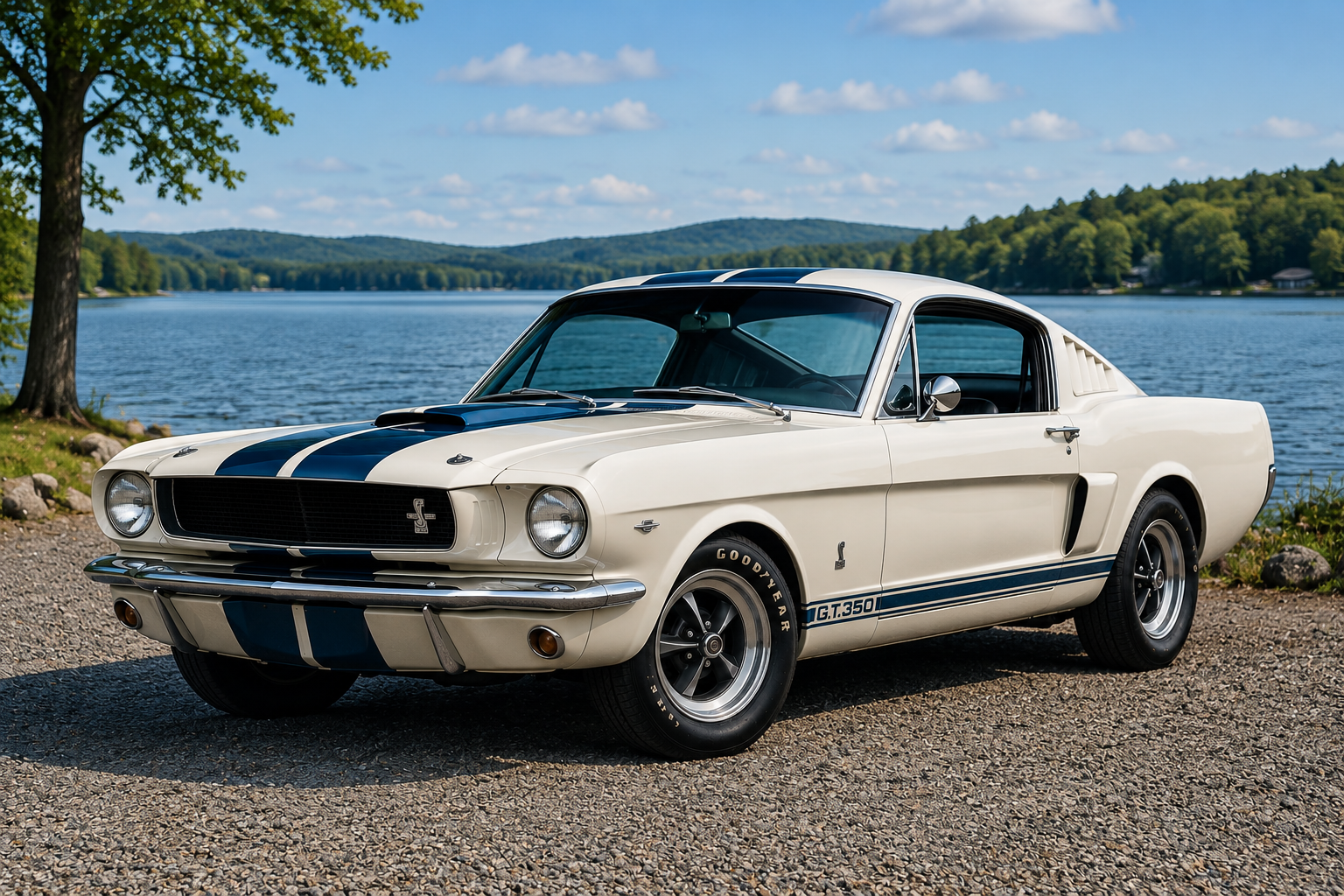
1965–1966 Shelby Mustang G.T.350
The 1965 Shelby GT350 was designed as a lightweight, track-focused version of the Ford Mustang. Powered by a high-performance 289 cubic inch V8 and modified by Shelby American, the GT350 quickly established itself as one of the most successful road-racing Mustangs ever built. The 1966 models retained the GT350’s performance heritage while adding comfort and convenience features that broadened its appeal.
Unlike many muscle cars of the era that relied on large engines for performance, the Shelby GT350 focused on reducing weight, improving suspension, and maximizing handling. This approach made the GT350 one of the most balanced American performance cars of the 1960s and helped establish Shelby’s reputation in road racing.
1965 Shelby GT350
The 1965 Shelby GT350 was created with performance as the primary goal. Built in limited numbers and heavily influenced by Shelby’s racing experience, these early cars featured numerous modifications that set them apart from a standard Ford Mustang and helped establish the Shelby legend.
All 1965 G.T. 350s were painted Wimbledon White with Guardsman Blue rocker stripes. Very few GT350s were delivered to the dealer with the optional “Le Mans” (or “LeMans”) top stripes, which run the length of the entire car. Approximately 28% of the 562 1965 cars built had Le Mans stripes. Dealers often added the stripes, probably at the customer’s request. Today, it is difficult to find a GT 350 not so equipped.
Many ERT 1965 cars had the battery relocated to the trunk, which was changed mid-year from complaints of fumes, and featured over-rider traction bars, relocated A-arms, as well as other modifications. Over-rider traction bars are named so because of their design being on top of the leaf spring as opposed to underneath them. There was only one transmission available, a 4-speed Borg-Warner T-10 manual. The exhaust system in the 1965 G.T. 350 was a side-exit dual exhaust with glass-pack mufflers. For this one year, the G.T. 350 also featured special 130 mph-rated Goodyear “Blue Dot” tires, named for the prominent blue dot on each sidewall. The 1965 G.T. 350 had a full size spare tire mounted in place of rear seats, making it a 2-seat-only vehicle (to be allowed to race under SCCA regulations as a “sports car”), and rode on either silver-painted steel wheels or special cast-magnesium center “Cragar Shelby” 15″ rims with chromed center caps marked with a stylized “CS”. Total 1965 model year production was 562 units.
1965 G.T.350R
The 1965 Shelby GT350R was the competition version of the GT350, built specifically for road racing. Lighter, more powerful, and less refined than the street version, the GT350R quickly proved its performance by winning races across the United States. These cars helped establish Shelby American as a dominant force in SCCA competition and remain among the most valuable Shelby Mustangs ever produced.
The 1965 G.T. 350 was not built for comfort or ease of driving. There were 34 “G.T. 350R” race-spec cars built specifically for competition use under SCCA rules, and the model was the B-Production champion for three straight years. The 1966 G.T. 350 had featured more comfort of casual drivers that included rear seats, optional colors, and an optional automatic transmission. This trend for additional features continued in following years, with the cars becoming progressively larger, heavier, and more comfortable, while losing much of their competitiveness in the process. The 1969 G.T. 350s and 500s were largely styling modifications to a stock Mustang. By 1969 Carroll Shelby was no longer involved in the Shelby GT program, and the design was done in-house by Ford.
The 1965 and 1966 G.T. 350s were delivered from Ford’s San Jose assembly plant in body in white form for modification by Carroll Shelby’s operation, originally in Venice Beach and later at Los Angeles International Airport. San Jose cars carried an “R” in the Ford VIN denoting that facility. The only year that Shelby Mustangs from the 1960s came from another plant was 1968, where they came from New Jersey, “T” in the VIN,[4] and were modified by A.O. Smith.
1966 Shelby GT350
The 1966 Shelby GT350 marked an important transition from a pure competition-inspired Mustang to a performance car with broader appeal. While retaining the high-performance character that made the GT350 famous, Shelby introduced additional color choices, improved styling features, and new comfort options. The 1966 model year also brought the availability of an automatic transmission and optional Paxton supercharger, making the GT350 attractive to a wider range of buyers while maintaining its impressive performance credentials.
The first 252 GT 350s for 1966 began as 1965 Mustang K-Code Fastbacks. These cars were specifically ordered by Shelby American for conversion into 1966 GT 350s. Upon delivery to Shelby-American, the cars were randomly picked for conversion. The Shelby VINs do not correspond in numerical order with Ford VINs. The Ford VINs were shipped in ‘blocks,’ but many differ significantly because the order they were taken for conversions.
Total production for 1966 was 1,373 fastbacks, including two prototypes and four drag cars, and the 252 early production models with Ford Mustang 1965 bodies. In order to help Shelby sales, Ford, the major shareholder of Hertz, persuaded the rental car giant to purchase 1,003 fastbacks, including two prototypes. Four “experimental” G.T. 350 convertibles were also built for test purposes in anticipation of a 1967-1/2 convertible offering, bringing total production to 2,378 units for 1966. A small number of the 1966 models were fitted from the factory with Paxton superchargers, but not the No-Spin limited slip differential; with an option price of $670 USD, the engine was rated at 440 hp (330 kW).
1966 Shelby G.T. 350 Hertz models
The 1966 Shelby GT350H, commonly known as the “Hertz Shelby,” became one of the most famous special-edition Mustangs ever produced. Through a partnership between Shelby American, Ford, and the Hertz rental car company, enthusiasts could rent a high-performance Shelby GT350 for a weekend and experience race-inspired performance firsthand. Today, the black-and-gold GT350H models are among the most recognizable and collectible Shelby Mustangs of the 1960s.
When the Hertz cars were returned to Ford to be prepared for sale to the public, the high-performance parts were often “lost” (presumably at the manufacturer) before final sale.
The specifications below highlight the key features of the 1965–1966 Shelby GT350, including production years, engine options, dimensions, and drivetrain information. These early GT350 models established the foundation for every Shelby Mustang that followed.
1965–1966 Shelby GT350 Specifications
Assembly – Los Angeles, California
Body style – 2-door fastback, convertible and hardtop
Engine 289 cu in (4.7 L) Windsor V8 2-barrel
Horsepower – 306 hp
Transmission – 3-speed automatic or 4-speed manual
Wheelbase – 108.0 in (2,743 mm)
Length – 181.6 in (4,613 mm)
Production – 562 (1965), 2,378 (1966)
1967 Shelby Mustang G.T. 350 / G.T. 500
For 1967, the G.T. 350 carried over the K-Code high performance 289 with a ‘COBRA’ aluminum hi-rise.
The 1967 model year was also a turning point for Shelby American. As demand for Shelby Mustangs increased, Ford assumed a greater role in engineering, purchasing, and production. During this transition, production challenges and quality-control issues led to major operational changes, including the eventual relocation of Shelby Mustang production from California to Michigan. These changes marked the beginning of a new era for the Shelby brand while preserving the performance image that made the GT350 and GT500 famous.
1967 Shelby GT350 Specifications
Assembly – 1967: Los Angeles, California
Body Style – 2-door Fastback, Convertible
Engine – 289 cu in (4.7 L) Windsor V8
Horsepower – Up to 306 hp
Transmission – 3-speed Automatic or 4-speed Manual
1967 Shelby Mustang G.T. 500
While the GT350 continued to offer small-block performance, the introduction of the GT500 brought Ford’s powerful 428 cubic inch big-block V8 to the Mustang platform. These models featured aggressive styling, improved performance, and remain among the most desirable Shelby Mustangs ever produced.
The G.T. 500 was added to the lineup, equipped with a “Ford Cobra” V8 (FE Series 428 cu.in.) engine with two 600 CFM Holly four-barrel carburetors sitting atop a mid-rise Aluminum intake manifold.
The 1967 model year was also a turning point for Shelby American. As demand for Shelby Mustangs increased, Ford assumed a greater role in engineering, purchasing, and production. During this transition, production challenges and quality-control issues led to major operational changes, including the eventual relocation of Shelby Mustang production from California to Michigan. These changes marked the beginning of a new era for the Shelby brand while preserving the performance image that made the GT350 and GT500 famous.
1967 Shelby G.T.500
Assembly – 1967: Los Angeles, California
Body Style – 2-door Fastback, Convertible
Engine – 427 cu in (7.0 L) 428 V8
Horsepower – Up to 355 hp
Transmission – 3-speed Automatic or 4-speed Manual
Notable cars for 1967 include:
- 0100, the first G.T. 500 built.
- 0131, the only Shelby G.T. coupe built (“Little Red’), which was the precursor to the ’68 California Special
- 0139, the only Shelby GT 500 convertible built (in 1967) Note: cars 0100, 0131 and 0139 were the first big block Shelby G.T. cars ordered and built.
- One 1967 Fastback was updated with a G.T. 500 equipped with a 427 FE GT40 racing engine producing 650 horsepower, and was known as the “Super Snake”[17 The car was capable of speeds over 150 mph; hitting 170 mph during a demonstration (by Shelby himself) of Goodyear’s Thunderbolt tires. No cars other than the prototype were built due to limited interest. The car sold at Mecum’s 2013 Indianapolis auction for $1.3 million.
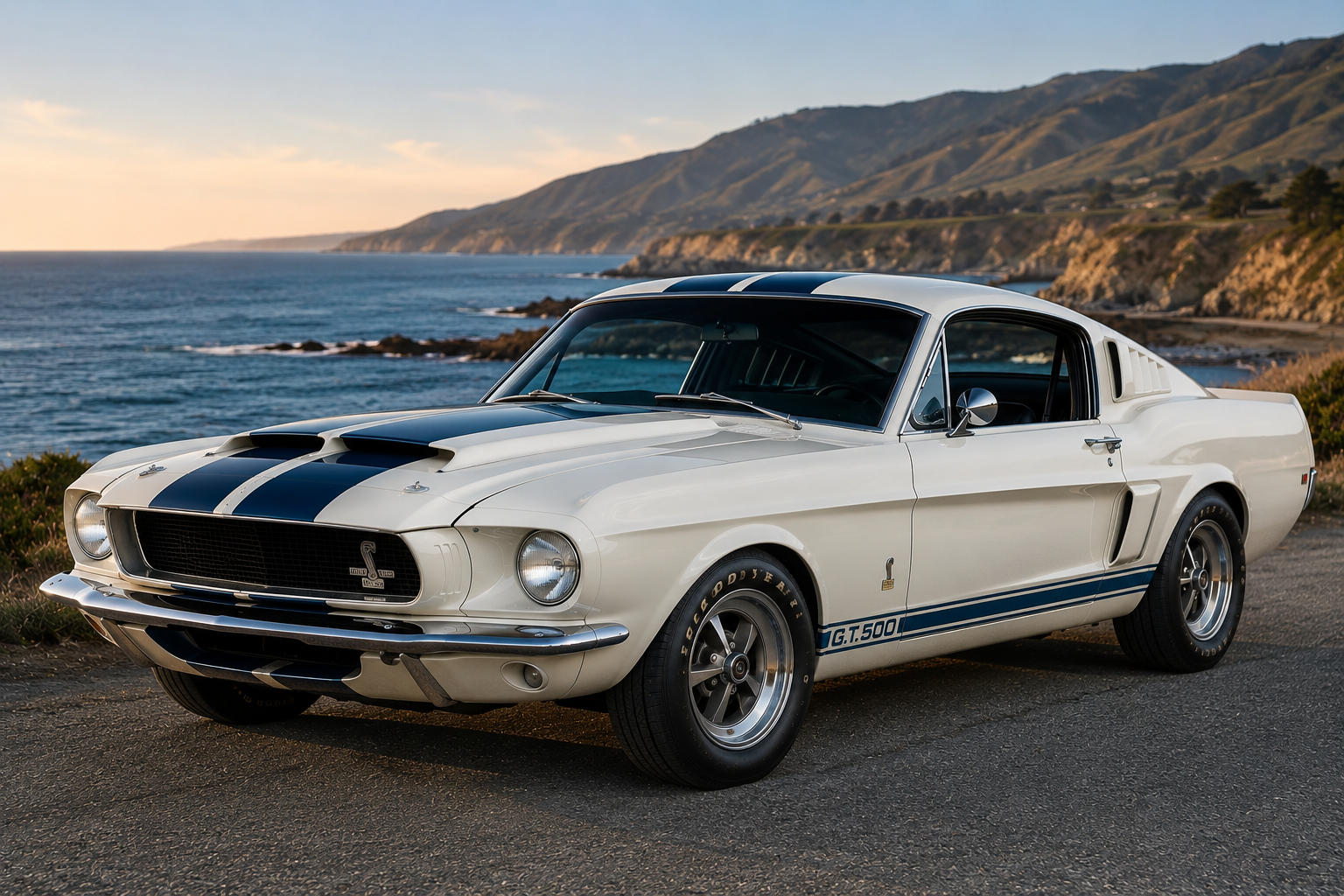
1968 Shelby Cobra GT500 fastback
1968 Shelby Cobra GT350 and GT500
For 1968, the Cobra name was officially added to both Shelby models, which were marketed as the Shelby Cobra GT350 and Shelby Cobra GT500. While Ford’s involvement in the Shelby program continued to increase, the cars remained true to their high-performance roots. New styling updates, improved comfort features, and revised engine combinations helped broaden the appeal of the Shelby lineup while maintaining its reputation as one of America’s premier performance cars.
The Shelby GT500 powered by Ford’s 428 cubic inch V8, the GT500 delivered impressive torque and performance while maintaining the distinctive styling that separated Shelby Mustangs from standard Ford Mustangs. With limited production numbers and strong collector interest, the 1967–1968 GT500 models remain among the most sought-after Shelby Mustangs ever produced.
1968 Shelby GT350 Specifications
Assembly – Ionia, Michigan
Body Style – 2-door Fastback, Convertible
Engine – 302 cu in (4.9 L) Cobra Jet V8
Horsepower – 250 hp
Transmission – 3-speed Automatic or 4-speed Manual
1968 Cobra G.T.500 Specifications
Assembly – Ionia, Michigan
Body Style – 2-door Fastback, Convertible
Engine – 427 cu in (7.0 L) 428 Cobra Jet V8
Horsepower – 335 hp
Transmission – 3-speed Automatic or 4-speed Manual
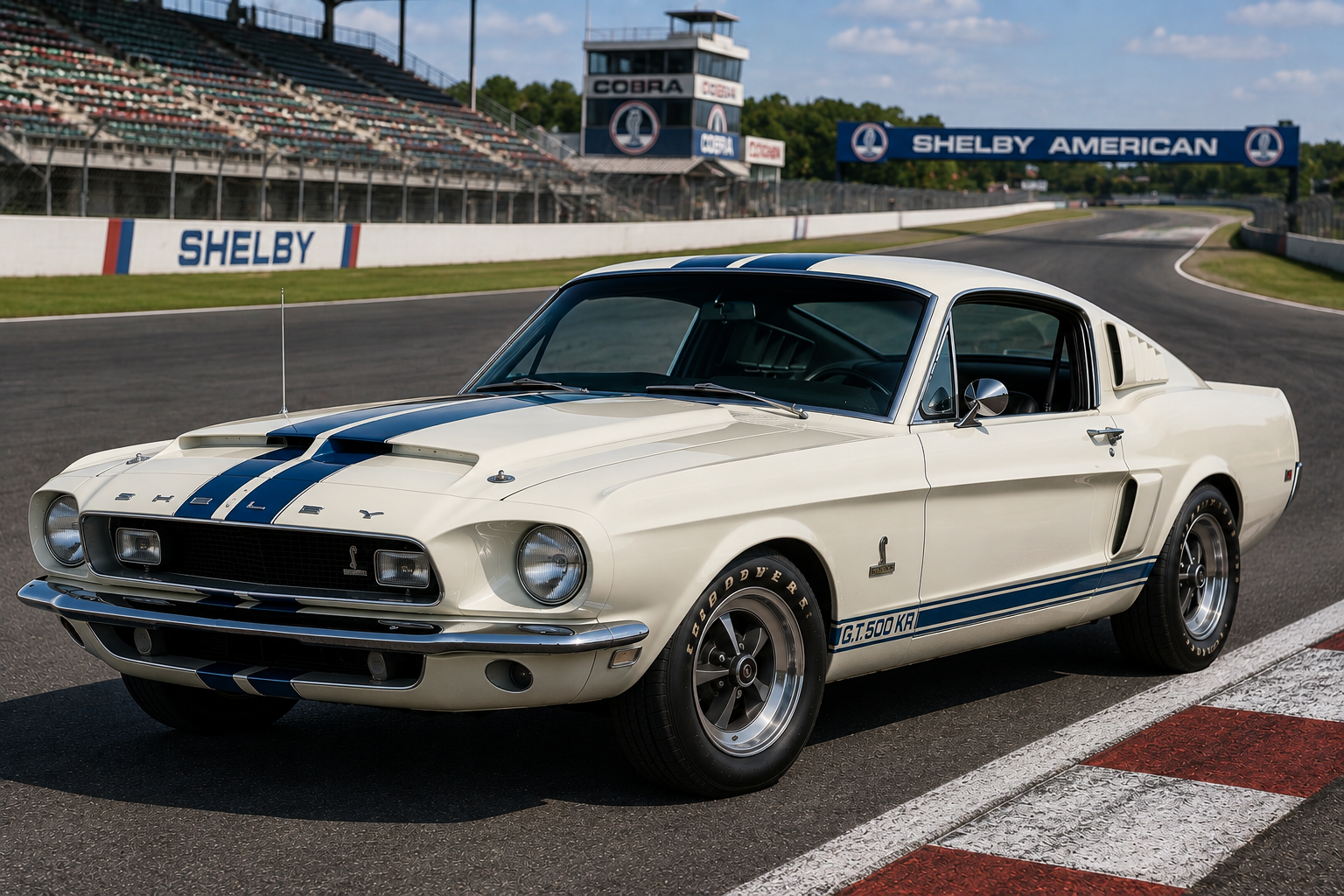
1968 Shelby GT500KR fastback
1968 Shelby GT500KR (King of the Road)
Introduced in April 1968, the Shelby GT500KR represented the ultimate expression of Shelby Mustang performance. The “KR” designation stood for King of the Road, a fitting name for one of the most powerful and desirable Shelby Mustangs ever built.
Powered by Ford’s legendary 428 Cobra Jet V8, the GT500KR was officially rated at 335 horsepower, although many enthusiasts believe the engine produced significantly more power than advertised. With its high-performance engine, aggressive styling, and impressive acceleration, the GT500KR quickly earned a reputation as one of the fastest American muscle cars of its era.
Available as both a fastback and convertible, the GT500KR combined big-block performance with the distinctive styling that made Shelby Mustangs stand apart from standard Ford Mustangs. Today, the GT500KR remains one of the most collectible and valuable Shelby models ever produced.
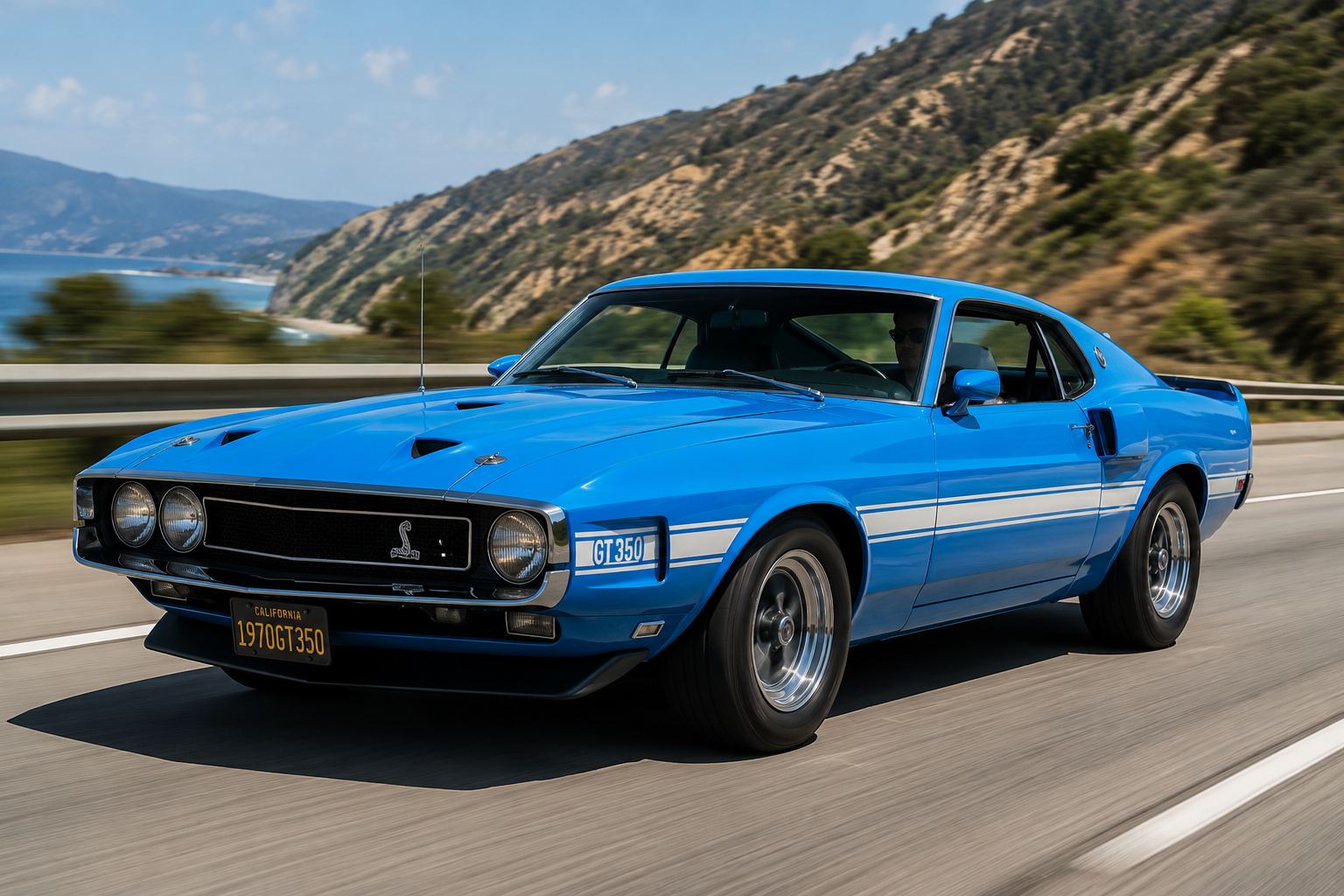
1970 Shelby GT350 Fastback in bright blue with white side stripes
1969–1970 Shelby Mustang GT 350 & GT 500
The 1969 and 1970 Shelby Mustangs represented the final chapter of the original Shelby Mustang era. Although Carroll Shelby’s direct involvement had diminished, the GT350 and GT500 continued to offer impressive performance, distinctive styling, and powerful V8 engine options. These final first-generation models remain highly collectible and marked the end of one of the most influential periods in American muscle car history.
The 1969 Shelby GT350 and GT500 received the most extensive styling changes in the history of the Shelby Mustang. A redesigned front end, revised rear styling, integrated scoops, and a longer overall body gave the cars a more aggressive appearance while maintaining their performance heritage. By this time, Ford had assumed most of the responsibility for design and production, with Carroll Shelby having only limited involvement.
For 1970, no new Shelby Mustangs were produced. Instead, unsold 1969 models were assigned new 1970 vehicle identification numbers and received minor cosmetic and emissions-related updates before being sold as 1970 models. A total of 789 vehicles were re-VINed, making the 1970 Shelby Mustangs among the rarest examples of the original Shelby Mustang era.
1969-1970 GT350 & GT 500 Specifications
Assembly – Los Angeles, California
Body style – 2-door fastback, convertible
Engine – 351 cu in (5.8 L) Windsor V8 (GT 350) 428 cu in (7.0 L) 428 V8 (GT 500)
Transmission – 3-speed automatic or 4-speed manual
Wheelbase – 108.0 in (2,743 mm)
Length – 191.0 in (4,851 mm)
Second-Generation Shelby Mustangs (2005–2014)
After a 35-year absence, the Shelby Mustang returned in 2005 based on the fifth-generation Ford Mustang. Working closely with Ford, Shelby American introduced a new generation of high-performance Mustangs that combined modern technology with the styling cues and performance heritage of the original 1960s models.
The reborn Shelby lineup included the Shelby GT-H, Shelby GT, GT500, GT500KR, Super Snake, GT350, Shelby 1000, and several limited-edition performance models. Horsepower increased dramatically during this era, growing from approximately 319 horsepower in the early Shelby GT models to more than 1,000 horsepower in the Shelby 1000.
2006–2007 Shelby GT-H
Ford and Shelby revived the famous “Rent-A-Racer” program with the Shelby GT-H. Available exclusively through Hertz, the black-and-gold GT-H paid tribute to the legendary 1966 GT350H. Powered by a modified 4.6-liter V8 and equipped with Shelby performance upgrades, the GT-H became one of the most recognizable modern Shelby Mustangs.
2007–2009 Shelby GT500
The return of the Shelby GT500 marked the beginning of a new performance era. Powered by a supercharged 5.4-liter V8 producing 500 horsepower, the GT500 combined modern engineering with classic Shelby styling. Developed jointly by Ford’s Special Vehicle Team (SVT) and Shelby American, the GT500 quickly became one of the most sought-after performance cars of its time.
2008–2009 Shelby GT500KR
The legendary King of the Road name returned in 2008 with the Shelby GT500KR. Producing 540 horsepower from a supercharged 5.4-liter V8, the GT500KR paid tribute to the original 1968 GT500KR while incorporating modern suspension, braking, and performance technology.
Shelby Super Snake
Introduced in 2007, the Shelby Super Snake became one of the most extreme Mustangs ever offered by Shelby American. Depending on configuration, horsepower ranged from over 600 horsepower to more than 800 horsepower. Inspired by the original 1967 Super Snake, these limited-production cars featured extensive performance, suspension, braking, and styling upgrades.
2010–2014 Shelby GT500
The redesigned 2010 Shelby GT500 continued to evolve with improved handling, aerodynamics, and performance. By 2013, the GT500 was powered by a supercharged 5.8-liter Trinity V8 producing 662 horsepower, making it the most powerful production Mustang ever built at the time. With a top speed exceeding 200 mph, the 2013–2014 GT500 established itself as one of the most capable American performance cars of its era.
Shelby Mustang Legacy
The Shelby Mustang remains one of the most recognized and collectible American performance cars ever built. From the lightweight GT350 race cars of the 1960s to the supercharged GT500 models of the modern era, Shelby Mustangs have combined Ford performance with Carroll Shelby’s racing heritage. Their limited production numbers, distinctive styling, and impressive performance continue to make them favorites among collectors and enthusiasts worldwide.
Shelby enthusiasts can find historical production information and Shelby Mustang resources through Shelby American and the Shelby American Automobile Club (SAAC).